

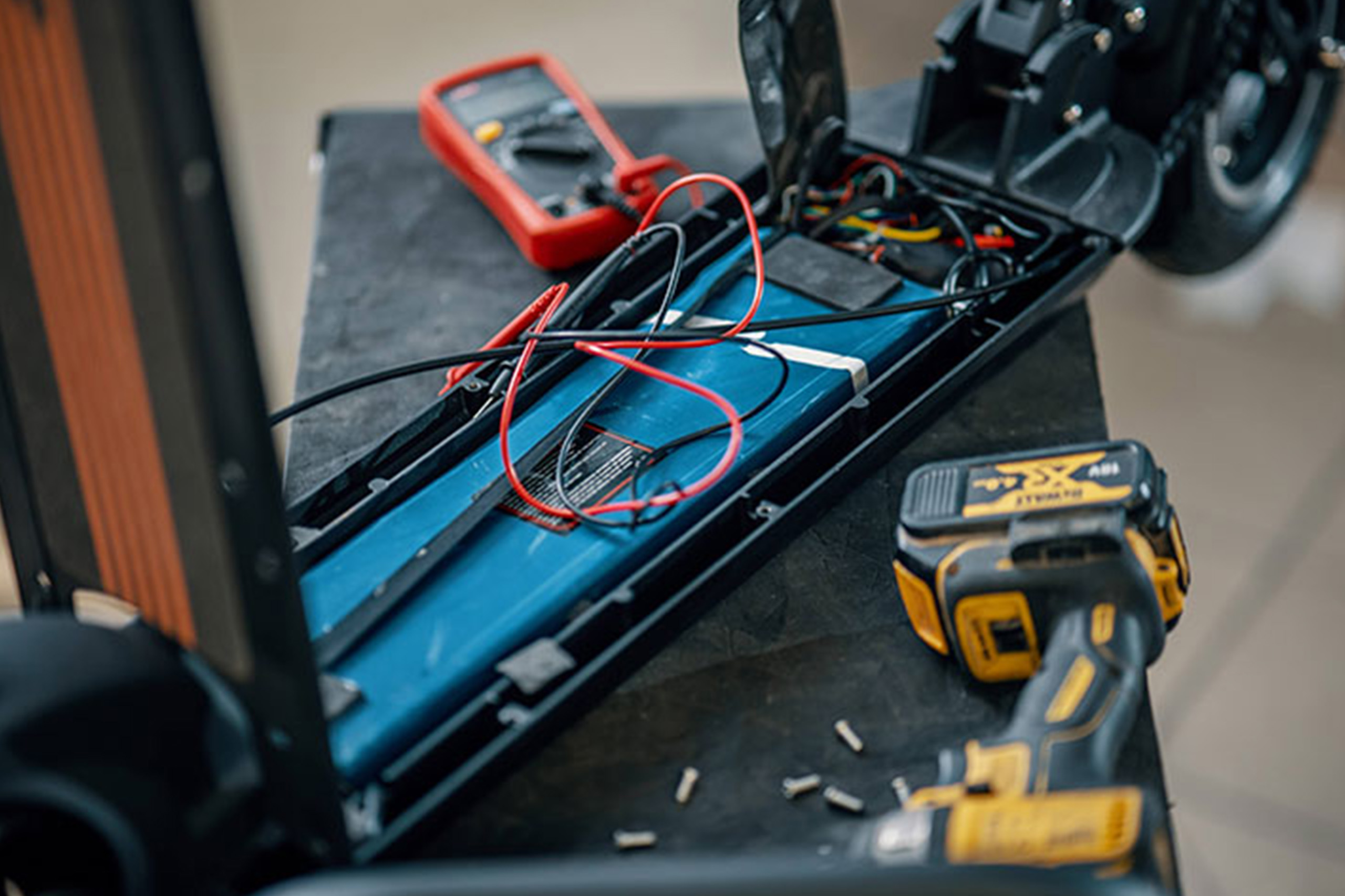
Electric Scooter Battery Repair and Maintenance – When to Fix It and When to Replace It 🔋
The heart of an electric scooter is its battery. When the battery starts to wear off, your scooter’s range decreases — especially in cold weather. You might also notice that the scooter turns off suddenly, even when the battery indicator shows it’s half full. Or maybe the battery seems to recharge instantly, going from empty to full in minutes. So what should you do when battery problems appear — repair or replace?
The truth is, not every “dead” or tired battery is actually beyond saving. Often, a specialist repair is enough to bring your scooter back to life.
Experience Matters Most
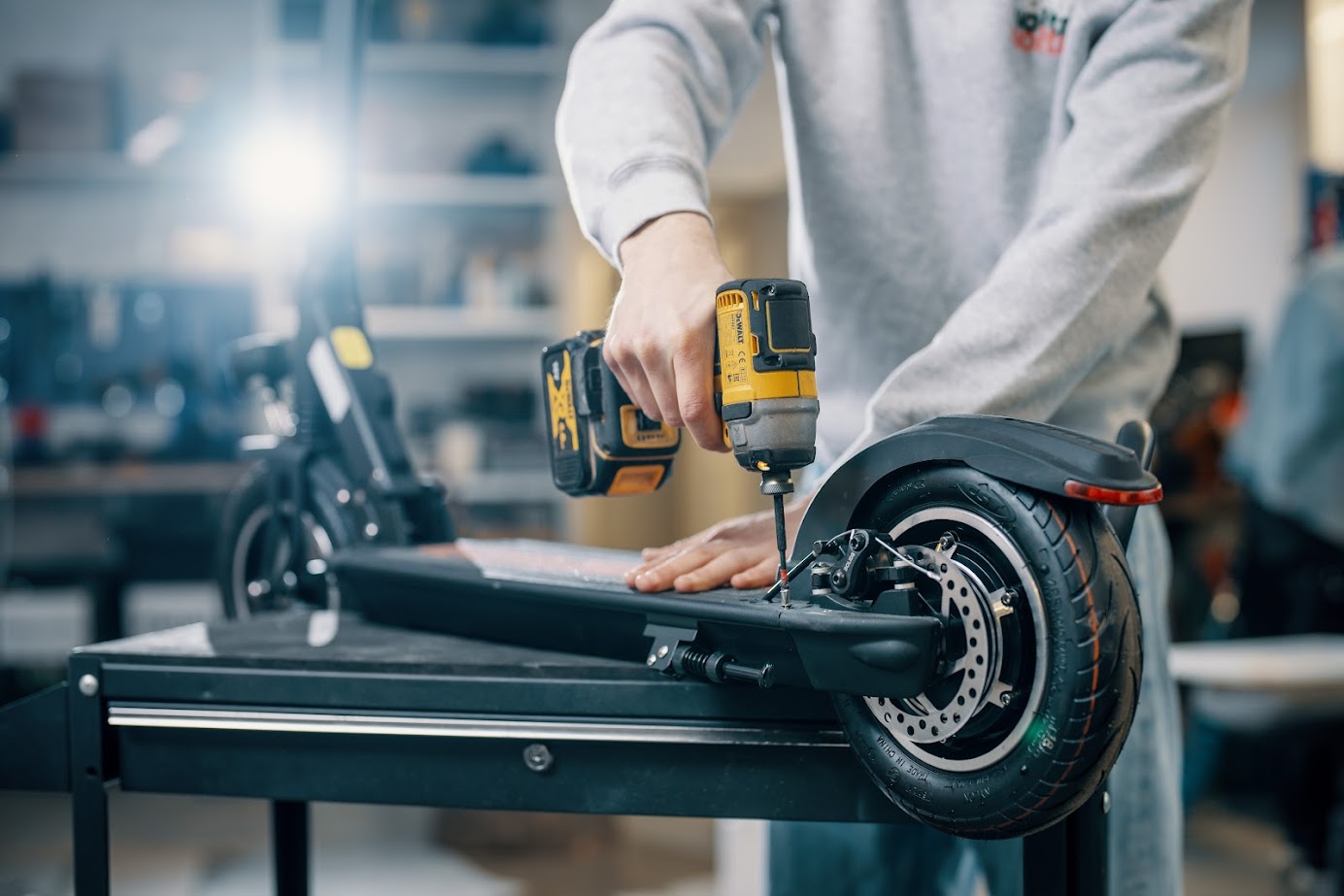
Voltride has been repairing electric scooters and other e-mobility devices since 2016. Over the years, our workshop has seen tens of thousands of scooters coming in with a multitude of issues. Sometimes a flat tire, worn brake pads, or a loose handlebar. Other times, the problem is more complicated — the battery won’t charge, the motor sounds strange, or the controller has failed.
Fixing a scooter isn’t rocket science, but getting it right requires the right tools, parts, and skills.
And when it comes to diagnosing tricky problems, experience and know-how matter most. At Voltride, our technicians truly know these machines inside and out.
Sometimes Battery Issues Might Not Be Caused by the Battery Cells
A scooter battery is made up of multiple cells managed by a BMS (Battery Management System).
In some case
This small circuit board:
- controls charging and discharging,
- protects against overvoltage,
- and regulates power delivery to the motor.
If the BMS fails, the scooter may appear completely dead — it won’t charge or turn on. A faulty BMS can also cause the voltages of different battery cell groups to drift apart over time. If the cell voltages become too out of balance, then the scooter will start having issues with charging, and the battery pack will also not be able to output its full capacity.
From our experience, most battery issues come from water damage or worn-out cells, though sometimes the problem is just a faulty BMS — and those cases are usually the simplest to fix if a compatible BMS is available. In reality, about 90% of battery repairs involve cells that are already at the end of their life, which means the only proper solution is to replace all of them. This is especially sensible when the original battery is no longer sold. The good news is that older packs used lower-capacity cells, so a full recell with modern ones often increases both capacity and overall reliability.
In warranty cases, the entire battery pack (including the BMS) is usually replaced. But outside of warranty, replacing just the BMS will be much cheaper than buying a whole new battery.
Important: Replacing a BMS is a specialist job. A connection fault or incompatible BMS can damage the battery or the BMS or even cause a fire. Always let a qualified technician handle this.
How Long Does a Battery Last?
Battery lifespan is measured in charging cycles.
Most manufacturers estimate around 500-600 full charge cycles, after which the battery retains about 60–70% of its original capacity. This is however tested at a discharge rate of 1C. Riding an electric scooter will, in most cases, discharge the battery at a much lower rate, which will, in general, result in the battery’s usable cycle life being even higher.
For example, if your scooter (say, a GPad Svan Max) can travel up to 40 km per charge, that means a theoretical lifespan of about 16,000 km before the battery starts to deteriorate notably. An active rider might cover 1,500–3,000 km per season, so a well-maintained battery can easily last several years before its performance starts to noticeably drop.
How to Extend Battery Life?
Battery health depends heavily on how you use and store your scooter. Small habits make a big difference:
- Don’t leave the battery sitting when it is fully drained, as an empty battery can become damaged over time. So when riding your scooter until it’s empty, it is important to always put it on charge as soon as possible.
- Avoid riding in the rain. Moisture is a battery’s biggest enemy — even “splash-proof” scooters don’t handle heavy rain or puddles well.
- Don’t charge immediately after riding. Let the scooter and battery cool down first. IF you ride in the winter and you have just been riding outside, then it is critical not to charge the battery before it has warmed up. Never charge a battery when it is colder than 10 degrees.
- Never charge a wet scooter. Wait until it’s completely dry.
- Keep the charging port covered to prevent dirt and water from getting in.
- If storing the scooter for a long time, keep the battery around 50–60% charged and top it up every few months. The battery should also always be stored in a warm place, where the temperature is about 10-25°C.
Following these simple rules can significantly extend your battery’s lifespan.
When to Repair and When to Replace?
- If the battery doesn’t charge at all but worked fine before, the issue can lie with the charging port, or charger — all of which can be repaired or replaced easily.
- If the battery charges and drains very quickly, one or more cells may be weak. Balancing the battery might help, but replacing individual cells is not usually recommended, since the new cell would need to be the same model of cells with exactly the same amount of ware as the rest of the cells in the pack and it would thus be very difficult to find suitable replacements — you can’t patch an old coat with a new piece of fabric. So in this case, it would make sense to either replace the whole battery pack or, at a minimum, replace all of the cells in the battery pack.
- If the battery is physically damaged (swollen, hit, or water-logged), then replacement is the safest option.
General rule: If the repair costs more than half the price of a new battery, replacing the battery or the whole scooter makes more sense. But if the issue is minor and the battery is otherwise in good shape, or if a replacement battery is no longer available, then repairing it is both eco-friendly and budget-friendly, and can also in some circumstances be the only option.
Learn more from Voltride’s head of maintenance, Uku, who explains more about scooter batteries in this video:
Note: Video is in Estonian.
Where to Service Your Scooter or Battery?
Voltride’s workshop in Telliskivi street 57D handles all major scooter brands daily — Inokim, GPad, Dualtron, Speedway, E-TWOW, Inmotion, Kaabo, KuKirin, Kugoo, VSett, Teverun, Ultron, and many others.
Our goal is simple: To perform repairs that last and give you honest advice — whether it’s worth fixing or time to consider a new battery.
If you’re unsure whether your scooter’s battery needs repair or replacement, bring it to us for a diagnostic check — we’ll tell you exactly what condition it’s in.
See what our customers say









Since 2016 Voltride has shipped over 12,000 packages to private and B2B customers


Fast Shipping all across Europe

Watch Us in Action
Voltride for Commuters, Active Riders and Professional Users
Voltride started in 2016 as a family company gathering enthusiasts and specialists to attract more and more people and businesses to the electric lifestyle. Lifestyle of fun and function, or to put it more elegantly: commuters, active riders and professional users in delivery, tourism and business operations. Voltride is one of the largest players in Scandinavia and the Baltics in the area of personal electric mobility, serving customers across Europe.
Over 12,000 items shipped
2,000 + products and spare parts available in stock
Deliveries to over 34 countries







 About Us